Tesla Model 3 Suspension Problems
Tesla Model 3 Suspension Problems: Symptoms, Causes & Which Parts May Need Replacing
The Tesla Model 3 is known for its responsive handling, low centre of gravity and instant electric power delivery. However, like any vehicle, its suspension components are subject to wear, road impacts and mileage.
Suspension problems can develop gradually or appear suddenly after hitting a pothole, kerb or other road hazard. Common symptoms include creaking, clicking, knocking, steering play, uneven tyre wear and changes in vehicle alignment.
Understanding the symptoms can help you identify which Tesla Model 3 suspension component may require inspection or replacement.
In this guide, we explain the most common Tesla Model 3 suspension problems, the parts involved, warning signs to look for and what to consider when replacing suspension components.
Tesla Model 3 Suspension: What Components Are Involved?
The Model 3 uses an independent suspension system with multiple control arms and links at the front and rear.
Tesla’s service documentation identifies components including:
- Front upper control arms
- Lower lateral links
- Lower compliance links
- Steering and tie-rod components
- Front suspension knuckles
- Hubs
- Stabiliser bar links
- Rear suspension arms and links
- Rear knuckles
- Bushings and ball joints
Tesla’s service manual provides dedicated inspection and replacement procedures for many of these components.
Because these components work together, a problem with one suspension part can sometimes affect wheel alignment, steering feel or tyre wear.
1. Creaking Noise From the Front Suspension
One of the most recognisable suspension complaints is a creaking noise from the front of the Tesla Model 3.
The noise may become more noticeable when:
- Turning the steering wheel
- Parking at low speed
- Driving over uneven surfaces
- Entering or leaving a driveway
- Loading the suspension
- Manoeuvring at full steering lock
Tesla’s current Model 3 service documentation specifically includes an inspection procedure for front upper control arm creaking noise, with the steering turned left and right while the vehicle is on the ground.
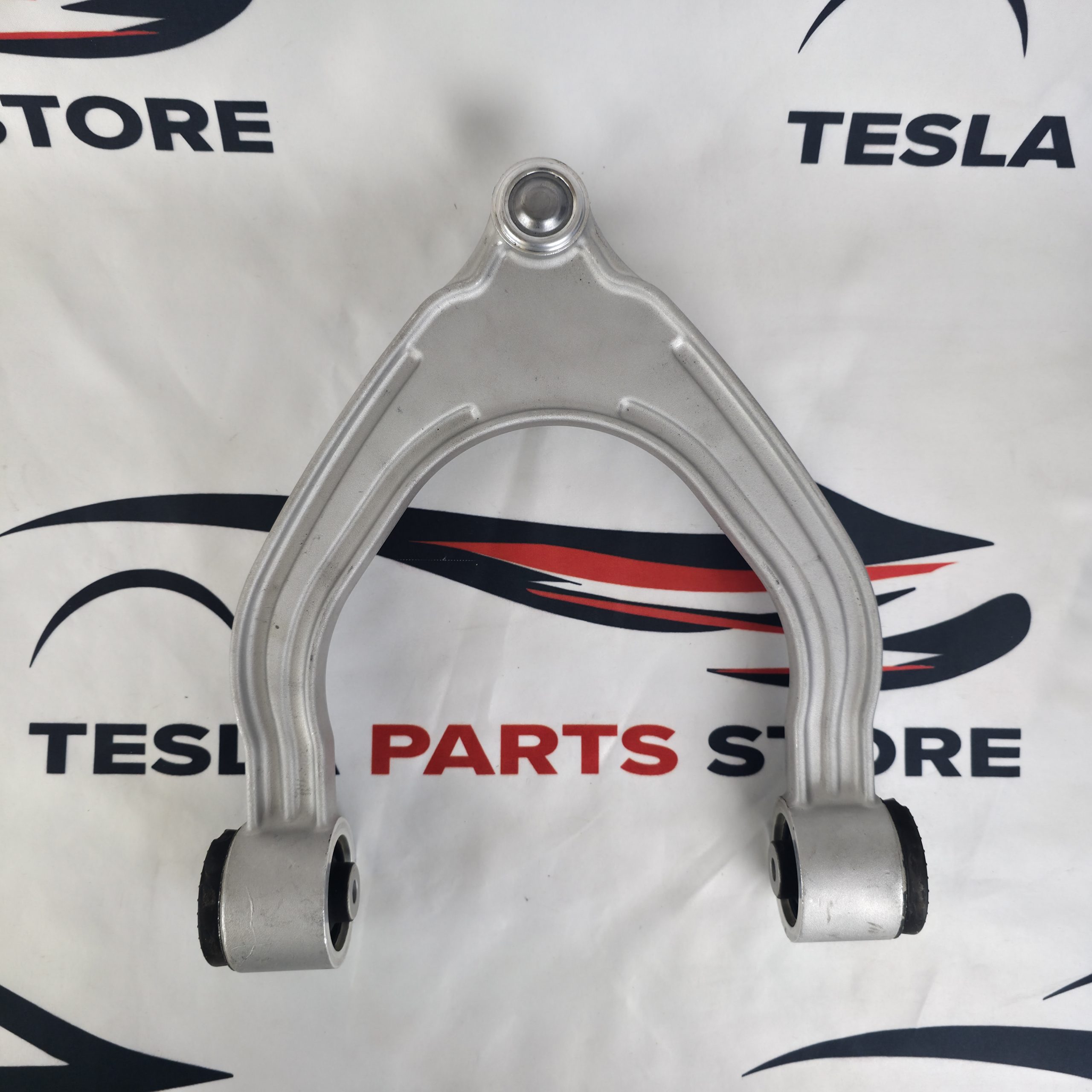
Possible cause: Front Upper Control Arm
The upper control arm connects the suspension assembly to the vehicle body and helps control suspension geometry.
If the component or its bushing develops excessive wear, it can produce noise or changes in suspension behaviour.
If you hear persistent creaking, the suspension should be inspected rather than assuming that replacing a single component will solve the problem.
2. Clicking Noise When Turning
A clicking or knocking sound when turning the steering wheel, particularly at low speeds, can indicate an issue within the front suspension or steering system.
Tesla’s Model 3 service documentation specifically identifies the front lateral links as a component to inspect for clicking noise when the steering is turned to full lock.
Possible symptoms include:
- Clicking during tight turns
- Knocking over uneven roads
- Steering that feels different from normal
- Increased suspension movement
- Changes in wheel alignment
A professional inspection is recommended before ordering replacement parts.
3. Worn Lower Lateral Links
The lower lateral links are an important part of the Model 3 front suspension.
They help control the position of the wheel assembly relative to the vehicle and contribute to correct suspension geometry.
Wear can potentially result in:
- Suspension noise
- Excessive movement
- Alignment problems
- Uneven tyre wear
- Changes in steering behaviour
Tesla’s service documentation includes dedicated procedures for removing and replacing the front lower lateral links, demonstrating their role as serviceable suspension components.
When replacing suspension links, always verify the correct part number and vehicle configuration before ordering.
4. Lower Compliance Link Wear
The lower compliance links are another important component of the Model 3 front suspension.
The compliance system allows controlled suspension movement while helping maintain appropriate wheel positioning under braking and road loads.
A worn compliance link or bushing may contribute to:
- Knocking noises
- Steering instability
- Changes in braking feel
- Uneven tyre wear
- Alignment issues
Tesla’s service manual includes specific replacement procedures for the lower compliance links, including replacement as a pair.
5. Steering Play or Loose Steering Feel
If your Tesla Model 3 develops excessive steering play, the issue should be investigated promptly.
Potential causes can include wear in:
- Inner or outer tie rods
- Control arm joints
- Suspension ball joints
- Knuckle components
- Other steering or suspension connections
Tesla’s service documentation includes specific inspection procedures for steering and suspension components, including the tie-rod connection at the front suspension knuckle.
A steering problem should never be ignored because suspension and steering components directly affect vehicle control.
6. Uneven Tyre Wear
Uneven tyre wear is one of the most useful visual clues that something may be wrong with suspension geometry or wheel alignment.
Look for:
- Excessive wear on the inside edge
- Excessive wear on the outside edge
- Uneven wear between left and right tyres
- Feathering
- Rapid tyre wear after suspension repairs
Suspension component wear can affect wheel positioning and therefore influence alignment.
After replacing suspension components, a four-wheel alignment should be considered where required by the repair procedure and vehicle configuration.
Tesla’s service documentation contains dedicated procedures for checking and adjusting four-wheel alignment.
Does a Tesla Model 3 Need Regular Suspension Maintenance?
Tesla vehicles do not require the same traditional maintenance schedule as petrol or diesel cars. However, that does not mean suspension components are immune to wear.
Tesla recommends maintenance based on vehicle condition and usage rather than a conventional annual service schedule. Its current Model 3 maintenance guidance includes tyre rotation, brake-related checks and other maintenance items, while noting that recommended work can vary depending on driving conditions and circumstances.
Suspension components should therefore be inspected when symptoms appear or when the vehicle has experienced impacts such as potholes or kerb strikes.
How to Diagnose a Tesla Model 3 Suspension Problem
If you notice a new noise or change in handling, start by identifying when the symptom occurs.
Noise when turning
Consider inspecting:
- Upper control arms
- Lower lateral links
- Ball joints
- Steering components
Noise over bumps
Consider inspecting:
- Control arms
- Bushings
- Stabiliser links
- Suspension joints
- Knuckle components
Vehicle pulling to one side
Consider checking:
- Tyre pressures
- Tyre condition
- Wheel alignment
- Suspension components
- Steering components
Uneven tyre wear
Consider checking:
- Wheel alignment
- Control arms
- Bushings
- Suspension links
- Knuckle and hub components
Steering play
Have the steering and suspension system inspected professionally.
OEM vs Aftermarket Tesla Suspension Parts
When replacing a Tesla suspension component, there are generally several options available.
Genuine OEM Tesla Parts
OEM components are manufactured for Tesla vehicles and are designed to match the original factory specification.
They can be a good choice when maintaining original equipment specifications is the priority.
Quality Aftermarket Parts
High-quality aftermarket manufacturers such as EVOSAMP produce replacement suspension components for Tesla vehicles.
A quality aftermarket part can provide a more cost-effective alternative to purchasing every component directly through a Tesla service centre.
The important factors are:
- Correct vehicle compatibility
- Correct OEM reference
- Material quality
- Manufacturing quality
- Accurate fitment
- Appropriate installation
- Correct alignment after relevant suspension repairs
At Tesla-Parts Store, we clearly identify whether a product is a genuine OEM component or an EVOSAMP aftermarket replacement, so customers can make an informed purchasing decision.
Should You Replace One Suspension Part or the Complete Assembly?
It depends on the condition of the vehicle and the specific repair.
If only one component is worn or damaged, replacing that component may be appropriate.
However, if several suspension components show signs of wear, purchasing a complete suspension kit can be more convenient and potentially reduce the cost and time involved in sourcing individual parts.
For example, a front suspension rebuild may involve several components including:
- Upper control arms
- Lower lateral links
- Lower compliance links
- Bushings
- Fasteners
Always follow the appropriate repair procedure and replace components based on their actual condition.
Why Wheel Alignment Matters After Suspension Repairs
Wheel alignment is particularly important after replacing suspension components that can affect wheel geometry.
Incorrect alignment can contribute to:
- Uneven tyre wear
- Steering wheel not being centred
- Vehicle pulling to one side
- Reduced handling stability
- Increased tyre costs
Tesla’s service documentation includes dedicated wheel-alignment procedures, and current Tesla repair documentation also highlights alignment-related conditions on certain Model Y vehicles.
For this reason, customers should follow the appropriate manufacturer’s repair and alignment requirements after suspension work.
When Should You Replace Tesla Model 3 Suspension Parts?
There is no universal mileage figure at which every suspension component needs replacement.
Actual service life depends on:
- Road quality
- Potholes and impacts
- Driving style
- Vehicle mileage
- Climate
- Vehicle load
- Previous repairs
- Component condition
A high-mileage vehicle driven primarily on smooth roads may have different suspension wear from a lower-mileage vehicle regularly driven on poor roads.
The best approach is to inspect the components when symptoms appear or as part of a professional suspension inspection.
Frequently Asked Questions
What are the most common Tesla Model 3 suspension noises?
Creaking, clicking and knocking can occur when suspension or steering components require inspection. Tesla’s service documentation specifically provides inspection procedures for front upper control arm creaking and front lateral link clicking.
Can I replace Tesla Model 3 control arms myself?
Some experienced DIY mechanics may be capable of suspension repairs, but suspension work involves safety-critical components. Tesla provides service information intended for professional technicians, and correct lifting, torque procedures and alignment requirements must be followed.
Do suspension repairs require wheel alignment?
Depending on the component replaced, an alignment may be required or strongly recommended. Always follow the applicable repair procedure for your specific vehicle and component.
Are EVOSAMP Tesla suspension parts genuine Tesla parts?
No. EVOSAMP components are aftermarket replacement parts, not genuine Tesla parts. Tesla-Parts Store is an independent retailer and is not affiliated with, authorised by or endorsed by Tesla, Inc.
How do I know which Tesla suspension part I need?
The safest approach is to identify the vehicle model, production year, drivetrain where relevant, suspension position and existing OEM part number. If there is uncertainty, have the vehicle inspected by a qualified technician before ordering.
Final Thoughts
Suspension problems should not be ignored, particularly when they affect steering, wheel alignment, tyre wear or vehicle stability.
For Tesla Model 3 owners, symptoms such as front-end creaking, clicking, knocking, steering play and uneven tyre wear are good reasons to have the suspension inspected.
Tesla’s own service documentation provides dedicated inspection and replacement procedures for many Model 3 suspension components, including upper control arms, lateral links, compliance links, knuckles and other suspension parts.
If a worn or damaged component is confirmed, choosing the correct replacement part and following the appropriate installation and alignment procedures can help restore the vehicle’s handling and suspension performance.
Tesla-Parts Store offers both genuine OEM Tesla components and selected high-quality EVOSAMP aftermarket parts, giving Model 3 owners more choice when repairing and maintaining their vehicles.
Important: Tesla-Parts Store is an independent retailer and is not affiliated with or endorsed by Tesla, Inc. Tesla®, Model 3®, and other Tesla trademarks belong to Tesla, Inc. Product references and OEM part numbers are used to identify vehicle compatibility.